


Endoscopy
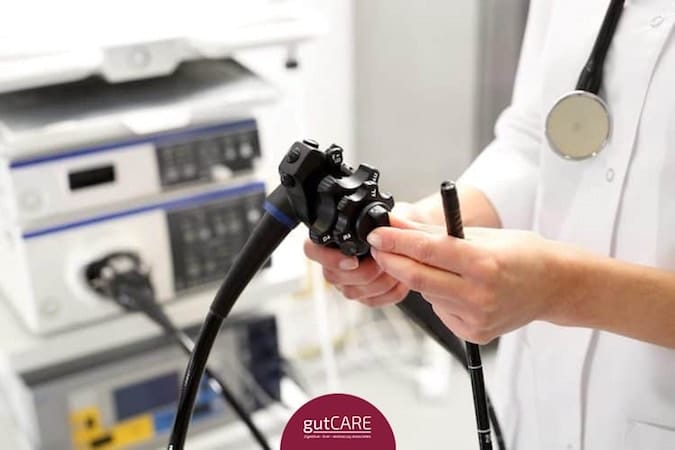
What is Endoscopy?
Endoscopy is a procedure in which an instrument (the endoscope) is introduced into the body through a natural orifice (like mouth or anus). The endoscope is a flexible tube with a video system that transmits and captures images and videos to a screen for viewing. This allows the specialist to see a clear detailed view of the digestive tract from the inside. The doctor that specializes in endoscopy is a gastroenterologist. Endoscopy is usually performed in a dedicated purpose built Endoscopy Center, or in an operating theater.
What is the Procedure for an Endoscopy?
Before undergoing an endoscopy, patients are prepared to ensure the procedure is safe and comfortable. Depending on the type of endoscopy, certain preparations are needed, and the procedure is carefully conducted to allow the gastroenterologist to examine the digestive tract thoroughly. The steps typically include:
-
Preparation:
- For upper endoscopy (esophagus, stomach, duodenum), patients may fast for several hours.
- For colonoscopy, bowel cleansing is required beforehand.
-
Insertion of the Endoscope:
- The flexible endoscope is gently introduced through the mouth (upper endoscopy) or anus (colonoscopy).
- The camera at the tip transmits live images to a monitor for the gastroenterologist to examine the digestive tract.
-
Examination and Intervention:
- The doctor inspects the lining for inflammation, ulcers, polyps, or other abnormalities.
- Biopsies (tissue samples) may be taken for further testing.
- Certain therapeutic procedures, such as polyp removal or stopping bleeding, can also be performed during the endoscopy.
-
Completion:
- The endoscope is carefully withdrawn.
- Patients are monitored for a short period until sedation wears off.
Endoscopy is generally safe and minimally invasive, allowing for both diagnosis and treatment without major surgery.
What Symptoms Indicate the Need for an Endoscopy?
An endoscopy may be recommended if you experience persistent or unexplained digestive symptoms. These include:
- Ongoing abdominal pain or discomfort
- Chronic heartburn or acid reflux
- Difficulty swallowing (dysphagia)
- Unexplained weight loss
- Nausea or vomiting
- Blood in vomit or stool
- Black, tarry stools
- Changes in bowel habits (diarrhea or constipation)
Purpose Of Endoscopy
The purpose of the endoscopy to examine the inside of our digestive tract and to perform biopsy. This allows the doctor to diagnose the cause of symptoms and hence to recommend the appropriate treatment.
What Diseases Can Be Detected by an Endoscopy?
- Conditions that can be detected through an endoscopy include:
- Gastroesophageal Reflux Disease (GERD) and Barrett’s esophagus.
- Peptic ulcers and stomach inflammation (gastritis).
- Celiac disease and inflammatory bowel disease (IBD) such as Crohn’s or Ulcerative Colitis.
- Early-stage cancers of the esophagus, stomach, and colon.
- Precancerous polyps and internal bleeding sources.
Endoscopy can also be used to directly carry out treatment, avoiding the need for unnecessary surgery.

Types Of Endoscopy

General endoscopy constitutes the majority of endoscopic procedures, and comprises of endoscopy of the upper gastrointestinal tract and the colon. Gastroenterologist are trained in general endoscopy, which helps them to evaluate most digestive symptoms and recommend treatment. Gastroscopy and colonoscopy are also used to screen for common digestive cancers such as stomach and colorectal cancer. If any polyps are found, they can usually be removed with standard polypectomy techniques. Some specialist would also be able to would also perform piles ligation and foreign body removal. Only the more seasoned gastroenterologist are comfortable with dealing with emergency bleeding in the digestive system using techniques like thermocoagulation, clip application, injection and ligation with bands.
-
Gastroscopy
Gastroscopy is used to examine the inside the esophagus, stomach and first part of the small intestine (duodenum). It is sometimes referred to as an upper gastrointestinal (GI) endoscopy or oesophagogastroduodenoscopy (OGD). It is used to investigate upper gastrointestinal symptoms such as epigastric pain and heartburn.

-
Colonoscopy
Colonoscopy is used to examine the inside of the colon or large intestine. It can also reach the last part of the small intestine. It is used to investigate lower gastrointestinal symptoms such abdominal pain, change of bowel habit and blood in stool. It is also the most important tool for colorectal cancer screening and prevention, where it can detect and remove precancerous polyps.

-
Polypectomy
During gastroscopy and colonoscopy, sometimes polyps are found. Polyps are benign growths that sometimes have potential to become cancer with time. The removal of polyps through endoscopy using specialized tool is called polypectomy. Special techniques may be needed to remove the polyps properly and to prevent complications.
-
Feeding Tubes
Supplemental tube feeding may be essential to provide nutrition to patients in patients who cannot swallow. The most commonly used feeding tube is a standard nasogastric tube, which can be easily inserted by the bedside and is suitable for short term feeding. Endoscopically placed feeding tubes may be helpful in the following situations:
- Gastroscopy placed nasogastric tube: A gastroscope may be required to insert a nasogastric tube in situations where bedside placement is not possible; for example in patients with narrowing or blockage of the esophagus.
- Percutaneous gastrostomy (PEG): A large calibre feeding tube that is placed through the abdominal wall into the stomach to allow direct feeding. The PEG tube is placed with the aid of a gastroscope, but can subsequently be changed easily at the bedside.
- Nasojejunal feeding tube (NJFT): A long tube which passes from the nose into the small intestine, bypassing the stomach altogether. This tube is useful in patients with stomach outlet obstruction, or problems with stomach emptying.
- Percutaneous gastrostomy with jejunal feeding tube (PEG-J): This technique combines a PEG tube together with a jejunal tube that goes through the PEG tube.
-
Piles Ligation
Not an endoscopic procedure per se, this often is done after proper assessment with colonoscopy. Piles ligation is a safe and effective treatment for small to moderate sized internal piles (hemorrhoids) that are causing symptoms and do not respond to medical treatment.
-
Emergency Endoscopy
Vomiting blood or passing out large amount of fresh blood or black stool can be an emergency. This may be associated with dizziness and weakness. It can be life threatening.. The patient should be kept fasted and go to the hospital as soon as possible. Emergency endoscopy may be necessary to stop the bleeding. Endoscopic control of bleeding is highly effective, and can avoid the need for surgery.
-
Foreign Body Removal
Sometimes foreign body may be inadvertently swallowed or inserted into the anus. The removal of these foreign body is usually done through endoscopy. This can sometimes be an emergency.

-
Anesthesia & Sedation For Endoscopy
Effective sedation is essential to ensure that the patient have a good experience undergoing endoscopic examination. You will not feel or remember the endoscopy process. We also ensure that it is carried out in a safe manner with adequate monitoring.


At GUTCARE, we offer a comprehensive range of advanced endoscopic procedures, utilising state-of-the-art technology to diagnose and treat complex digestive conditions with precision, safety, and minimal invasiveness.
Advanced endoscopy goes beyond conventional scopes to provide enhanced visualisation, therapeutic capabilities, and access to deeper parts of the gastrointestinal tract. These procedures are especially useful for patients with complex symptoms or previously diagnosed digestive disorders requiring more targeted interventions.
Our advanced endoscopic services include:
-
Endoscopic Ultrasound (EUS):
Combines endoscopy and ultrasound imaging to visualise the digestive tract and surrounding organs, enabling accurate diagnosis and staging of conditions such as pancreatic cysts, bile duct stones, and gastrointestinal cancers.
-
Endoscopic Retrograde Cholangiopancreatography (ERCP):
A specialised technique used to diagnose and treat problems in the bile ducts and pancreatic ducts, such as obstructions, strictures, or gallstones.
-
Enteroscopy (including single- or double-balloon enteroscopy):
Provides access to the small intestine, allowing diagnosis and treatment of obscure gastrointestinal bleeding, tumours, or strictures not reachable by standard scopes.
-
Advanced Polypectomy & EMR/ESD (Endoscopic Mucosal/ Submucosal Dissection):
Enables the removal of large or complex polyps and early-stage gastrointestinal cancers without the need for open surgery.
Our team of experienced gastroenterologists is highly trained in performing these procedures safely and effectively, prioritising patient comfort and optimal outcomes. At GUTCARE, we believe in a patient-centric approach that combines cutting-edge techniques with compassionate care.
When is Advanced Endoscopy Recommended?
Advanced endoscopy may be advised if:
- You have symptoms that remain unexplained after standard tests
- Imaging or prior endoscopy shows abnormalities requiring further evaluation
- You are being monitored for high-risk digestive conditions
- Minimally invasive treatment is preferable to surgery
To find out if advanced endoscopy is right for your condition, consult with one of our specialists.
Make an appointment today: https://www.gutcare.com.sg/
Safety in Endoscopy
Safety in Endoscopy is paramount. The specialist will normally identify the potential complications and its risk factors, and will explain how to minimize the risk. Nonetheless, complications are inherent in any medical procedure. The overall complication rate for general endoscopy is low (< 1%). Advanced endoscopic procedures may have a higher complication rate, but this is usually lower than the alternative, which is usually surgery. For patients concerned about complications, they should ask their doctor about how their complication rates compare to the industry standard, and about what they would do if they encountered each complication. Be wary of those who say they have zero complications. Such doctors may not have done sufficient numbers of endoscopy or have been selecting only simple cases to do. They may not be able to recognize or manage a complication if encountering it for the first time.


Ensuring Quality Endoscopy
The biggest limitation of endoscopy is that it is highly operator dependent. This means that the quality of endoscopy varies greatly depending on the training and expertise of the doctor performing it. It is often difficult for patients to know the standard of a doctor’s endoscopy. Yet this is the most important determinant of Quality Endoscopy. The endoscopic community recognizes this, and there are several international recommendations on how patients can infer the quality of their doctor’s endoscopy.
The quality of the endoscopy may be inferred by the following:
- Overall number of procedures performed, and number performed per year
- Adequacy of bowel preparation (for colonoscopy)
- Polyp or adenoma detection rate (for colonoscopy)
- Average time to reach caecum (for colonoscopy)
- Quality of picture/documentation
- Complication rate of the doctor
A simple question to determine if your doctor is good: how many endoscopies has the doctor performed for his fellow doctors and nurses? Like in any industry, health care professionals usually have a better idea who to choose to perform endoscopy for themselves.
Many doctors claim to be experts. True endoscopy experts are few in number, and are highly sought after by the industry as Key Opinion Leaders, to help advance endoscopy equipment and techniques for the future, and to push the boundaries of what endoscopy can do. To determine whether a doctor is truly an expert, ask simple questions like:
- How many live demonstrations and endoscopic workshops has the doctor performed in?
- How many new equipment or devices has the industry invited the doctor to introduce to the country? The doctor should be able to describe the novel techniques he has pioneered.
- How many high level complex cases has the doctor done? The doctor should be able to describe some of these complex cases.
Endoscopy Cost in Singapore
When considering the procedure, many patients research how much does an endoscopy cost. Prices can vary depending on whether the procedure is performed in a public or private hospital, the type of sedation used, and whether therapeutic interventions (such as polyp removal) are required.
At GUTCARE, we help patients understand endoscopy costs, including MediSave usage and insurance coverage.
Endoscopy benefits patients greatly in the investigation, confirmation, and treatment of various GI conditions and raise patient outcomes. Visit a clinic and consult with your doctor regarding endoscopy. A specialist in gastroenterology will also provide expert consultation and recommendation of the endoscopy procedures appropriate for your condition.
These endoscopy procedures are also available in GUTCARE in Singapore, carried out by a trained team of specialists in gastroenterology. You can contact us to find out more about endoscopy and the costs involved.
